

Hyde's Guide - The Nutcracker
my christmas gift to you

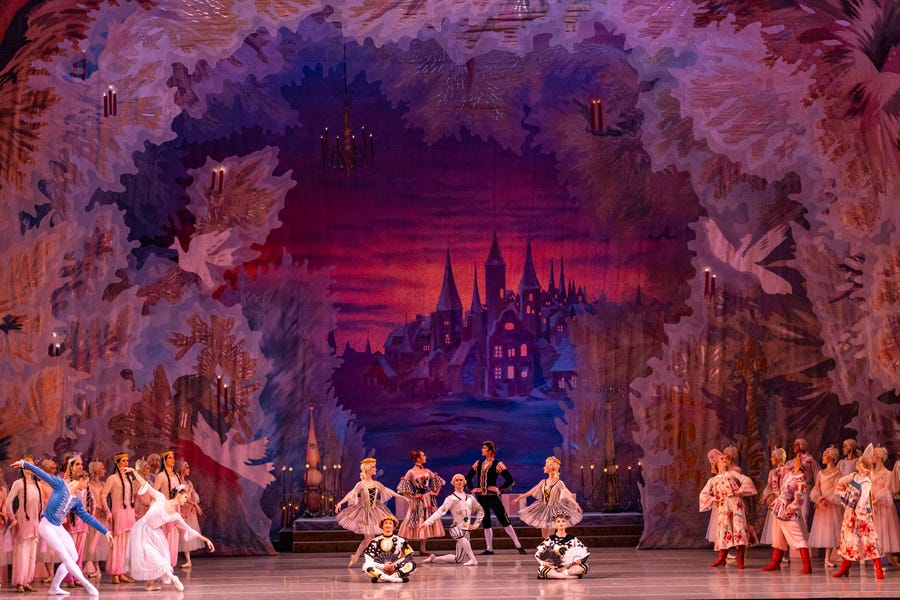
The founder of Ballets Russes, Sergei Diaghilev, was fiercely opposed to the filming of dance, believing that the art’s form - fleeting, unpredictable and impermanent - could never be truly captured by a camera. As such, only a twenty-eight-second film of the ballet company, secretly recorded, is known to exist. A hundred years later, however, the arts have never been more poorly funded, so every major ballet company will be coming to a cinema/televisual broadcast/streaming platform near you!
Despite many problems - racism, poor structure and general weirdness - The Nutcracker is the most popular ballet in the world, because it’s the production that is most likely to actually make a profit and enable companies to perform for the rest of the season. Some dancers love it, some hate it, but regardless, it’s seen as a necessity for the art of ballet to survive.
My first Nutcracker was The Royal Ballet’s by Peter Wright, and as much as I love it, I am keenly aware that it’s far from perfect. Sadly, the current run has sold out, but wanting my fix and to help you get yours, I decided to put on my dance critic hat and watch six versions of The Nutcracker that are free on YouTube, which I have reviewed below.
Please note: I will be referring to the protagonist as Clara/Marie/Masha1 interchangeably because I am a puritan wanker. If you need a brief synopsis of The Nutcracker, see this footnote2.
George Balanchine’s The Nutcracker, New York City Ballet - 2011
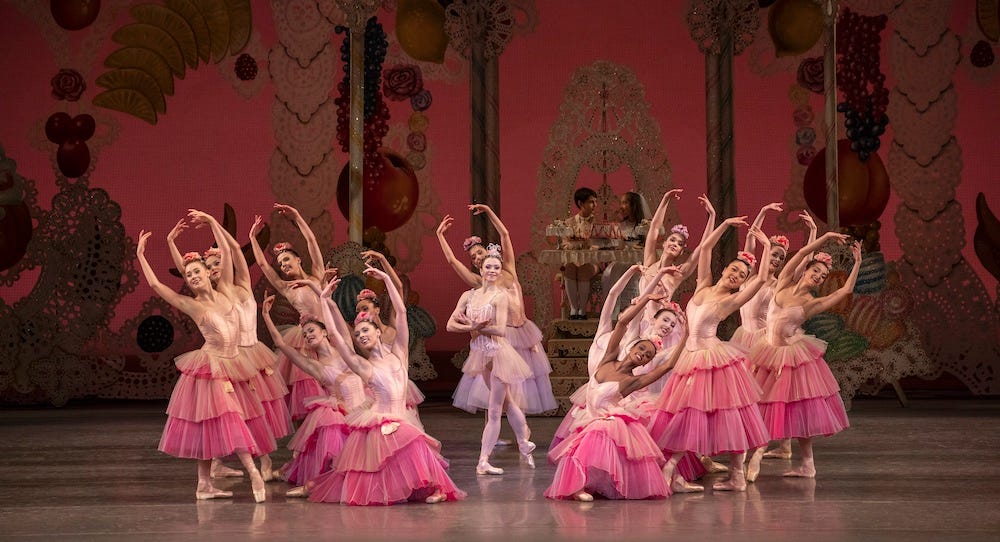
This production has been performed since 1954, and I don’t quite know how it’s survived. Balanchine’s highly formalised style and penchant for plotless ballets leave some balletomanes feeling cold, but I’m usually a fan.
The first act of this Nutcracker is staggeringly boring and undermined by being danced primarily by children. We have to wait fifteen minutes to see some proper Balanchine choreography, and even then, it’s just a doll that gets quickly packed away. It’s little surprise when the tree’s transformation gets a round of applause - there’s not much else worth clapping for in the first fifty minutes.
Despite beautiful conducting by Clotilde Otranto, Tchaikovsky’s score is wasted - not only does Balanchine add a movement from The Sleeping Beauty to accommodate a scenery change, but The Forest of Fir Trees in Winter, the most moving piece of Act 1, is taken up by Marie sleeping in a remote control bed that spins.
Megan Fairchild is an imposing presence as the Sugar Plum Fairy, and it’s sweet to see baby Tiler Peck as Marzipan. Even though the Act 2 solos are named after foodstuffs and are less ethnically-oriented, I hope some changes have since been made - that being said, making the Russian dance ‘Candy Cane’ and the gayest thing I’ve ever seen is very funny.
Mother Ginger makes a rare appearance, and I like that the Mouse King has six heads, for some reason. The Waltz of the Flowers and the Sugar Plum Fairy pas de deux are probably the world-standard, but I would encourage you to just watch those two dances in isolation.
Rudolf Nureyev’s The Nutcracker, Wiener Staatsballett, 2012
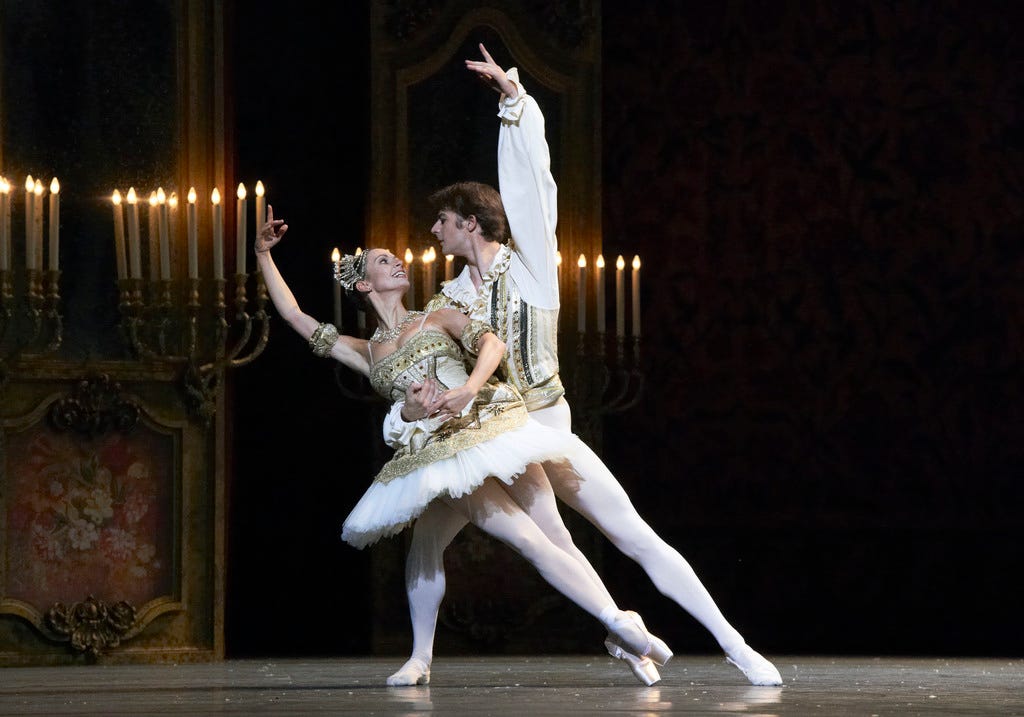
Live from Vienna, it’s Der Nussnacker! Rudolf Nureyev’s production, originally staged for The Royal Swedish Ballet in 1967, feels quite English, with flourishes of Kenneth MacMillan and Frederick Ashton in the choreography, especially the footwork. The production design is by Nicholas Georgiadis, and if you’re familiar with his work, I’m sure it will come as no surprise when I say that there’s a stunning array of earth-toned costumes with muted, geometric embellishments.
In terms of the ballet, the party is the first I’ve watched that I’ve actually wanted to attend - it feels raucous, lively, and is mostly free from 18-year-olds playing grandparents. The dances in Act 2 aren’t very good - the Arabian dance feels like the dry run of Nureyev’s La Bayadère (derogatory), and the Waltz of the Flowers feels like a deleted scene from his Raymonda. There are also bats at some point.
However, none of this detracts from how absolutely demented the plot is, because in this version, it is not the Nutcracker who turns into the Prince, but Uncle Drosselmeyer. Uncle Drosselmeyer with the limp and eyepatch suddenly turns into a teenage girl’s masculine ideal.
Now, the creepiness of this choice has been commented on for nearly sixty years, but I think if you can make peace with it, it becomes quite funny - who amongst us hasn’t had an absolutely demented crush as a teenager? I have many as an adult (see below). Also, as much as I think Rudi would have been the gay uncle of dreams, I wouldn’t have put it past him to make some lecherous comments ‘because he could’. Come for the creepy old man, stay for the fantastic snowflake costumes.
Rudolf Nureyev’s The Nutcracker, The Royal Ballet - 1968
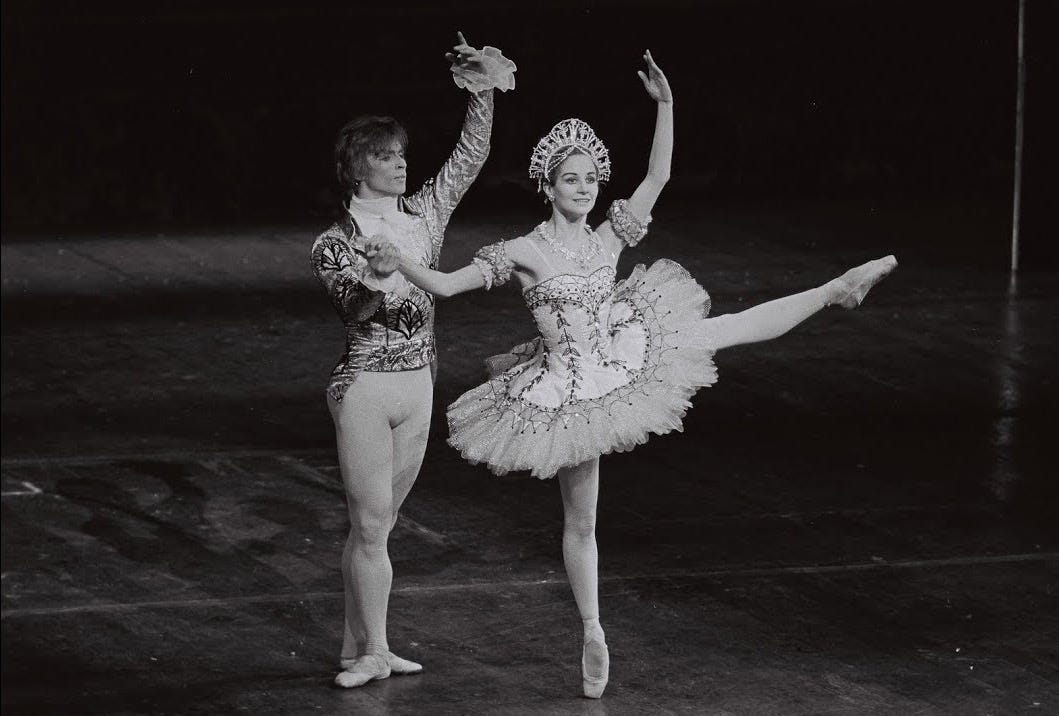
Now, you’d think I would be desperate to watch the restored 1968 Royal Ballet production of Nureyev’s ballet starring him and Merle Park. However, as soon as Nureyev limped onto stage, I noticed that he didn’t really look like himself, and it quickly became apparent that the ballet had been ‘restored’ with AI, and is genuinely hellish to watch. I can’t even enjoy Rudi being a lech with a very obviously thirty-year-old Merle Park, because his face looks like it’s melted. But AI’s the future, I’m sure.
Vasily Vaynonen’s The Nutcracker, The Mariinsky Ballet - 2012
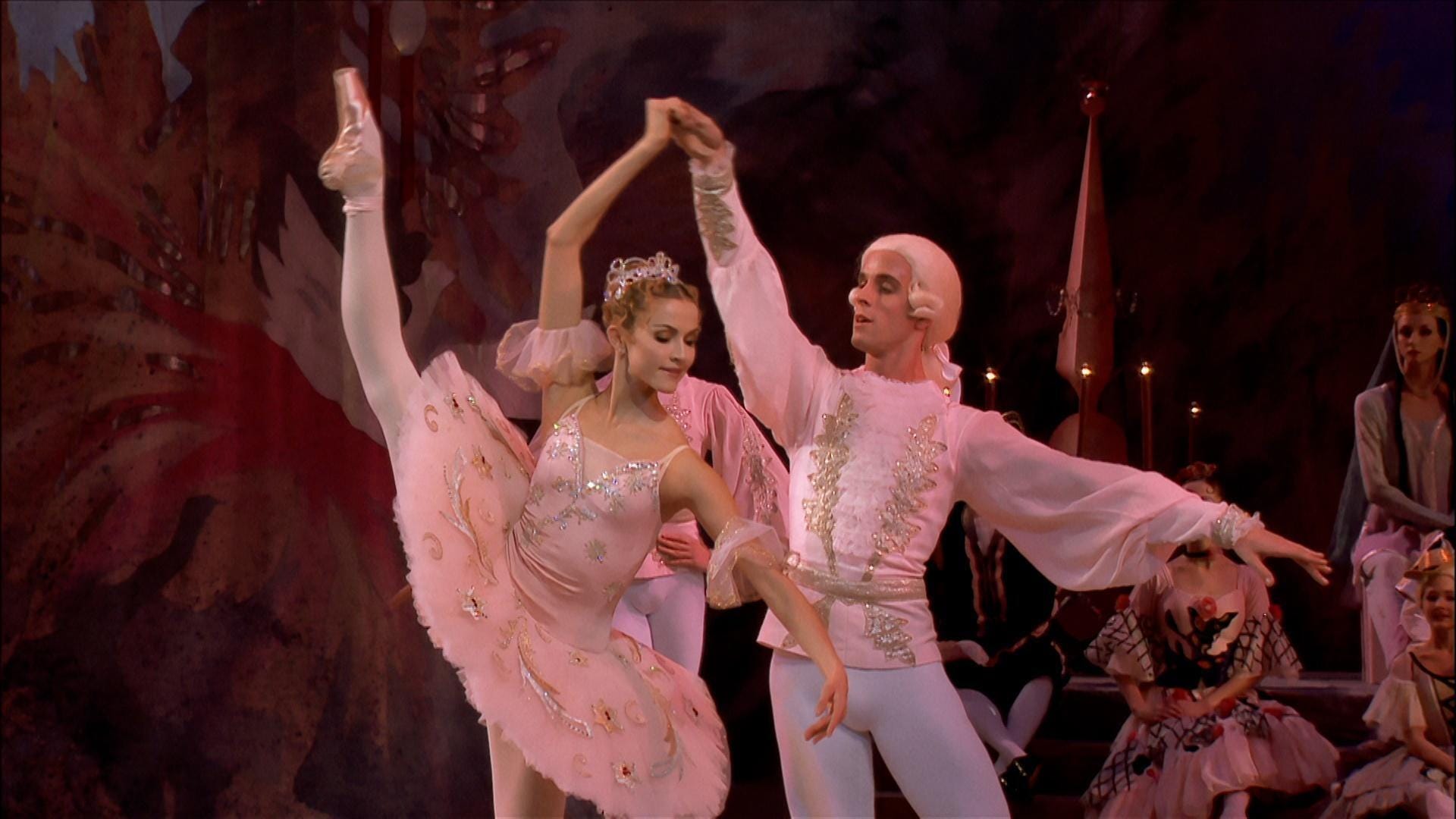
It was at the Mariinsky that The Nutcracker premiered in 1892, and so it stands to reason that, of the six I watched, the best production was theirs. Brilliantly filmed, with Valery Gergiev (who I regrettably still have a thing for) conducting, as soon as the curtain lifts and the Stahlbaums’ living room is revealed, you can tell from the formation of the dancers and the quality of their arms that this is ballet.
The production design is a late Georgian pastel feast with the older party guests in mantuas and the younger ones in A-line empire dresses (storytelling!). Masha is played by a young girl in pointe shoes and a stunning dress that Princess Charlotte will probably be wearing at Sandringham in the next few days, and there are some great period wigs.
Like a few other productions, Masha changes from a child to an adult dancer, and the transition in the production is so tasteful and magical that I cried on both occasions I watched it. The Mariinsky also does what I consider to be an incredibly baller move, which is to go without fake snow for Waltz of the Snowflakes. They know their dancers are the best in the world, and they will convince you through sheer movement that they are snowflakes.
There are some misses - there are multiple racist caricatures3, the pastoral is boring, and the Waltz of the Flowers with sixteen couples didn’t really work. What should be the Sugar Plum Fairy’s pas de deux is somehow a pas de six as Masha dances with five guys, but at least her tutu is fantastic.
Valery Kovtun’s The Nutcracker, National Ballet of Ukraine - 2019
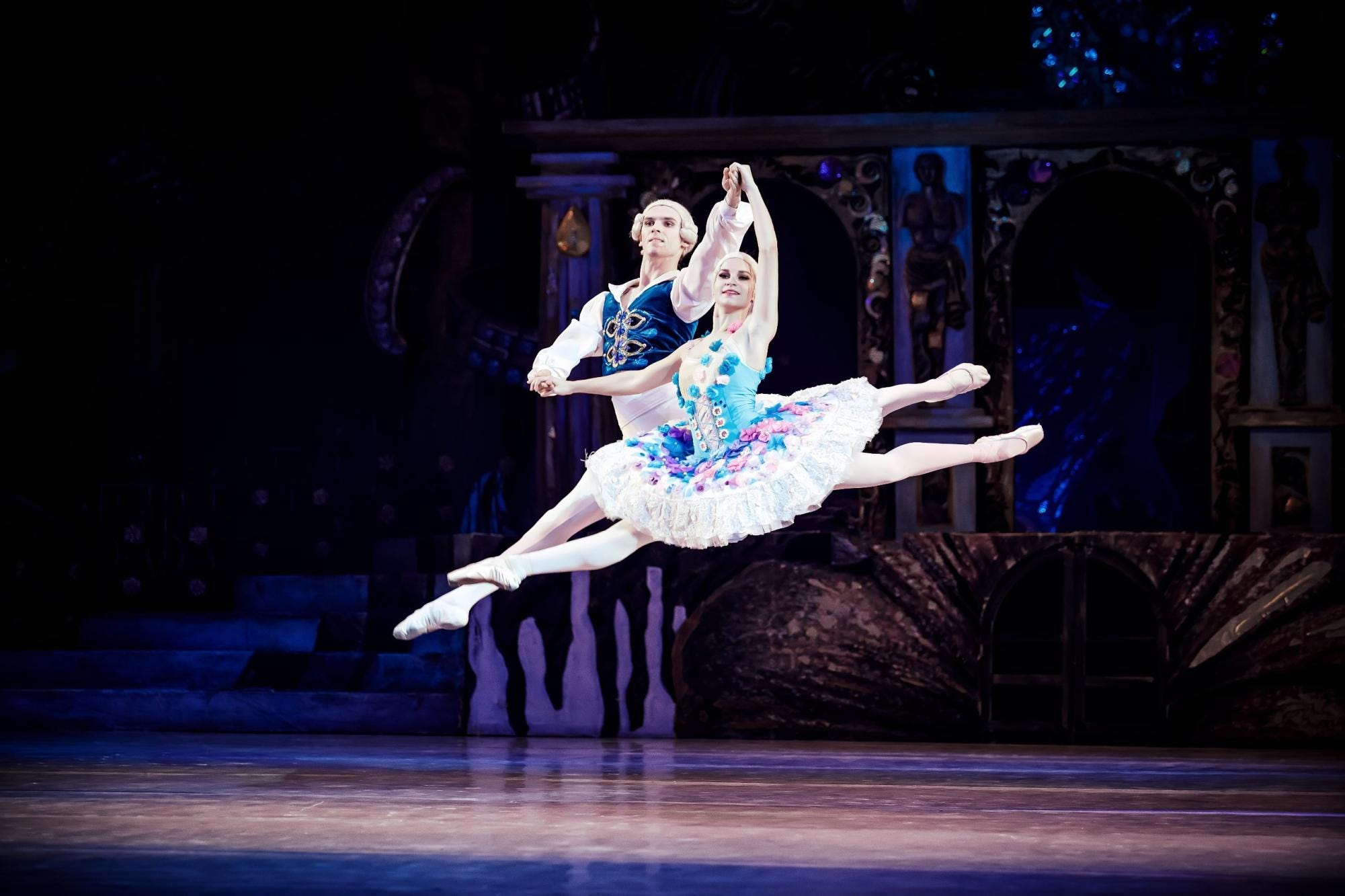
Live from Kyiv in the height of Summer, it’s The Nutcracker! I cannot work out why this was filmed in the Summer - I have been to Kyiv in the Summer, and it is sticky. If it were a wartime fundraising effort, I could forgive it more, but this was filmed in 2019, so who knows.
I could joke about watching this for ‘balance’ because I watched both the Bolshoi and Mariinsky’s productions, but I know in my heart that Ukraine is capable of producing world-class dance - I have seen world-class dance in Ukraine, and sadly, this is not world-class dance.
This production is cheap, ill-considered, and bad. It is confusing, abhorrently racist, and Clara’s false eyelashes are really distracting.
Because I love Ukraine, I’m going to attempt some balance, even though this production doesn’t deserve it, and say some nice things: the opera chorus during The Waltz of the Snowflakes goes hard, I like that the Nutcracker is played by a small woman, and as much as I was sad when she transformed into a man, he was at least hot.
Yuri Grigorovich’s The Nutcracker, The Bolshoi Ballet - 2024
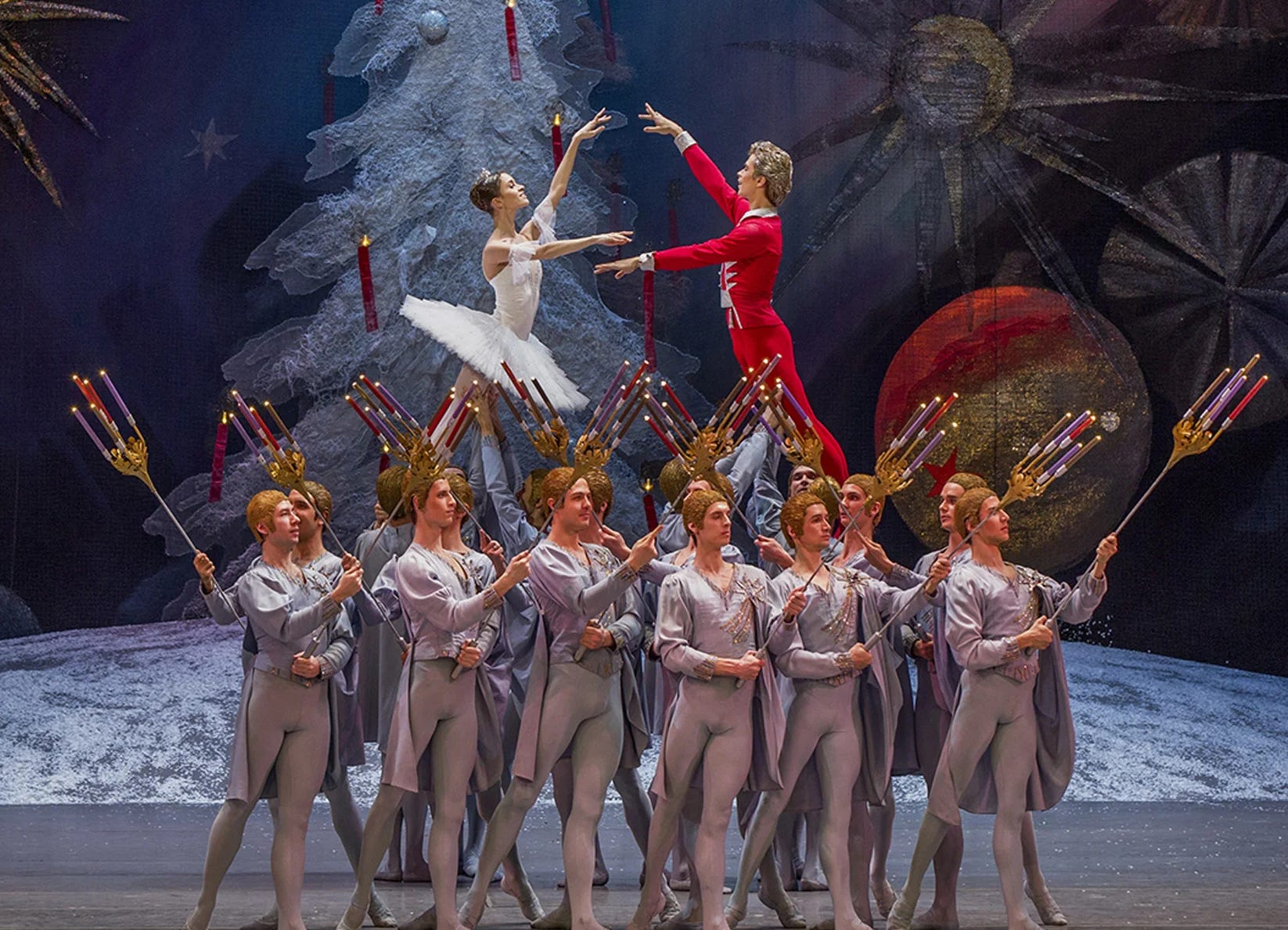
Broadcast on New Year’s Eve in Russia last year on Channel One, one questions if this advert-free production can truly be called that because the whole thing is an advert for Russian glory…that being said, seeing the Bolshoi’s interior and listening to the orchestra with Big Daddy Gergiev back in the Conductor’s Chair (being mates with Putin has its benefits), it’s kind of hard to disagree - balletically speaking, at least.
In terms of production design, the Bolshoi’s is sparser and less considered than the Mariinsky’s. Like in Kyiv, there are women dressed as boys for the party scene, and the Nutcracker is again played by a small woman. Drosselmeyer vogues randomly, and reminds me a lot of this party guest from the Masquerade scene in Joel Schumacher’s Phantom.
This production does go all out on practical effects - the Mouse King has a fantastic entrance, Drosselmeyer flies, and Masha and the Prince have fun in a flying boat. There are some aspects I really liked - that the dolls the children play with become the character dancers feels really considered, the tree’s transformation is fantastic, as is the Nutcracker’s - the audience applauded when he pulled off his mask, and, honestly, he was so hot it was deserved4.
After the Waltz of the Snowflakes (with actual snow), there is a thirty–minute documentary/propaganda break, but it doesn’t really succeed at either. There are some vaguely political statements about music ‘being the most democratic of the arts’, and that 2024 had ‘a lot of good things and some unfortunate things too’. There are wishes for ‘peaceful skies to all’, whatever that means, but it’s mostly just Bolshoi staff asking you to come to the theatre or telling you to call your family.
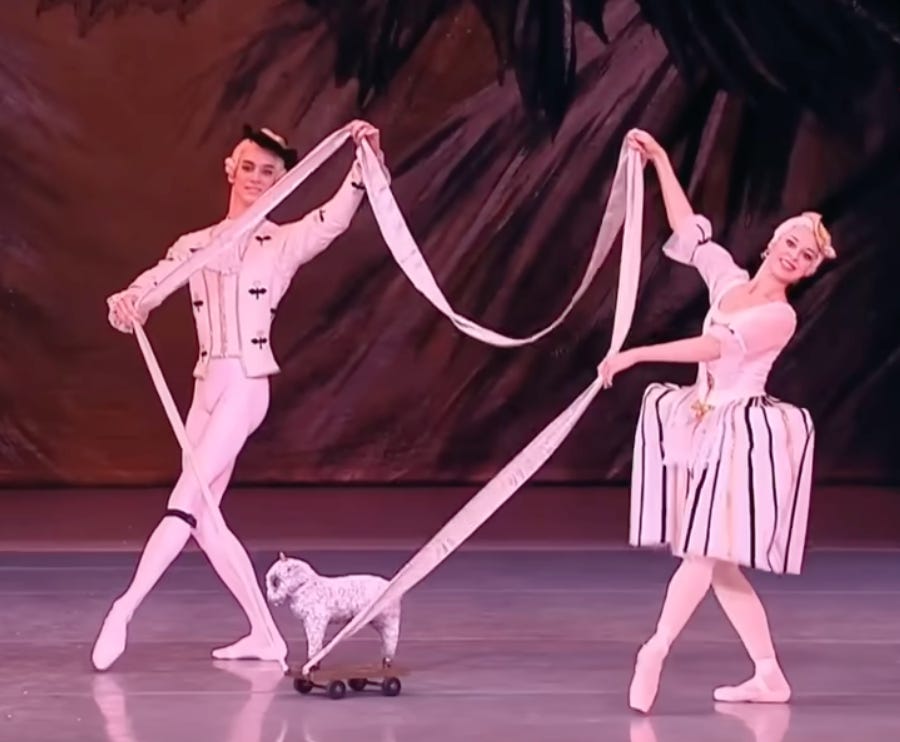
Act 2 is a mixed bag. The Chinese Dance is yikes, but the Pastoral, a pas de trois between a man, a woman, and a lamb on a skateboard, is incredible. It’s genuinely one of the funniest things I’ve watched, because you can sense the frustration in the gritted smiles of the dancers at having to maintain the structural integrity of a ribbon formation and sacrificing their entire childhood to wheel around a lamb on a skateboard.
The Waltz of the Flowers is sublime, and the Bolshoi’s vast stage enables the thirty-two dancers to create an incredible sense of scale. There’s some good old theatrical trickery at the end, and one of the best endings I’ve seen.
BONUS: Peter Wright’s The Nutcracker, The Royal Ballet - 2016
I didn’t tell you this, but if you set up an account on the Royal Opera House’s website and say you are under twenty-five, you will get free access to Royal Opera House Stream, where you can watch the 2016 recording of The Nutcracker. I know there are other versions on there, but there isn’t a more stacked cast than Francesca Hayward and Alexander Campbell as Clara and Hans-Peter, with Gary Avis as Drosselmeyer and Lauren Cuthbertson as the Sugar Plum Fairy. I know the Asian and Arabian dances are bad - just pause it and watch the 2022 version for like two minutes and go back afterwards.
BONUS BONUS: Sky Arts will be broadcasting English National Ballet’s new production of The Nutcracker on Christmas Eve at 2:15 pm.
And so concludes my guide. I am not remotely Nutcrackered out, which is either alarming or a good sign that I should be a Principal at The Royal Ballet. Please do watch some ballet - it changed my life, and it could change yours. I’ll be back with a paid subscribers post for Ralph Fiennes’ birthday on Monday; otherwise, I’ll see you after Christmas!
Remember - all your friends wanted you to buy them a paid subscription!
Lx
I know that Masha is a diminutive of Maria, but there are very clear distinctions between productions, so you shut up.
Based on a story by E.T.A. Hoffmann, The Nutcracker tells the story of a young girl called Marie/Masha/Clara, whose gay uncle, Herr Drosselmeyer, gives her a Nutcracker doll at her parents’ Christmas Eve party. Sometimes it contains the trapped soul of Drosselmeyer’s nephew, sometimes it doesn’t. That night, Masha/Clara goes downstairs to find her Nutcracker, only to be shrunk and forced to take part in a battle against some mice and their fierce King. After killing the Mouse King, Clara/Masha’s Nutcracker transforms into a handsome Prince, and after a frolic in the snow, the pair go to a magical realm ruled by the Sugar Plum Fairy to watch people from distant lands (you see where this is going) dance for them. The next morning, Masha/Clara wakes up to find out it was all a dream…or was it?
In other news, water is wet.
I would later follow the dancer on Instagram and immediately unfollow him when I saw that his pinned post was him with his children.